If you’re still relying on rankings to gauge your digital success, here’s where your current approach breaks. The world of search is rapidly changing, and if you’re not paying attention, you might find yourself left behind. Increasingly, users are turning to AI for answers instead of manually searching. This shift in behavior is reshaping how visibility is determined online. Despite achieving high rankings, you may have noticed a decline in clicks. That’s because ranking #1 doesn’t equate to visibility anymore—AI-generated overviews are taking center stage.
Google AI Overviews are an example of this trend. Users receive direct answers to their queries without needing to click through links. This evolution in search behavior is a wake-up call: the landscape is transitioning from traditional SEO to a new frontier—GEO, or Generative Search Optimization. Your goal should now be to ensure that AI chooses you as a credible source.

SEO vs GEO — What Actually Changed
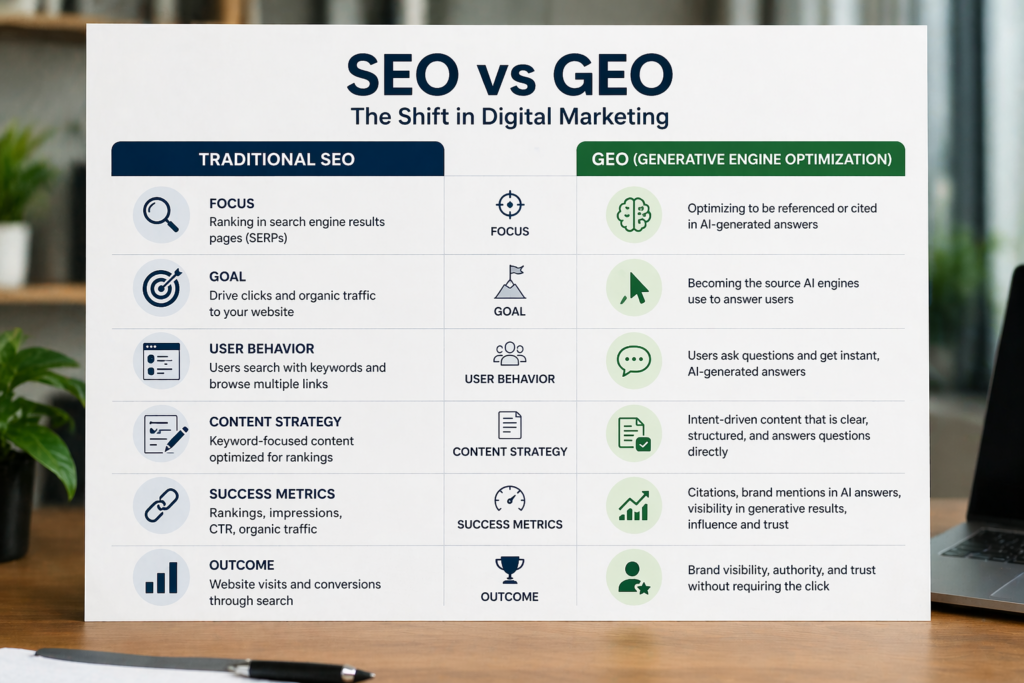
SEO and GEO differ fundamentally in their objectives and methodologies. SEO is about getting you ranked, focusing on keywords, backlinks, and technical optimizations to drive traffic. It’s a game of visibility through rankings. In contrast, GEO—Generative Search Optimization—aims to make you a reference point in AI-driven answers. The shift requires a focus on context, clarity, and authority to ensure your content is chosen by AI to answer user queries.
SEO gets you ranked. GEO gets you referenced. This fundamental difference means that SEO remains relevant for driving traffic, but GEO is crucial for positioning your content as an authoritative source selected by AI. Understanding these distinctions is key if you want your content to remain visible in the AI era.
The Real Differences
The transition from SEO to GEO marks a profound change in strategy. Traditional search intent, where users type specific keywords, is evolving into conversational intent. People now ask AI complex questions expecting synthesized responses. This shift means that instead of competing for top spots among ten links, the goal is to be one of the few cited sources in a comprehensive AI-generated answer.
Algorithm signals, such as keyword density and backlink quantity, are giving way to comprehension and trust signals. AI prioritizes content it can understand and trust, favoring those that offer clear, authoritative insights. The implications are significant: strategies must now be centered around producing content that AI can digest and trust enough to cite as a reliable source.
The Platform Shift (Credibility Layer)
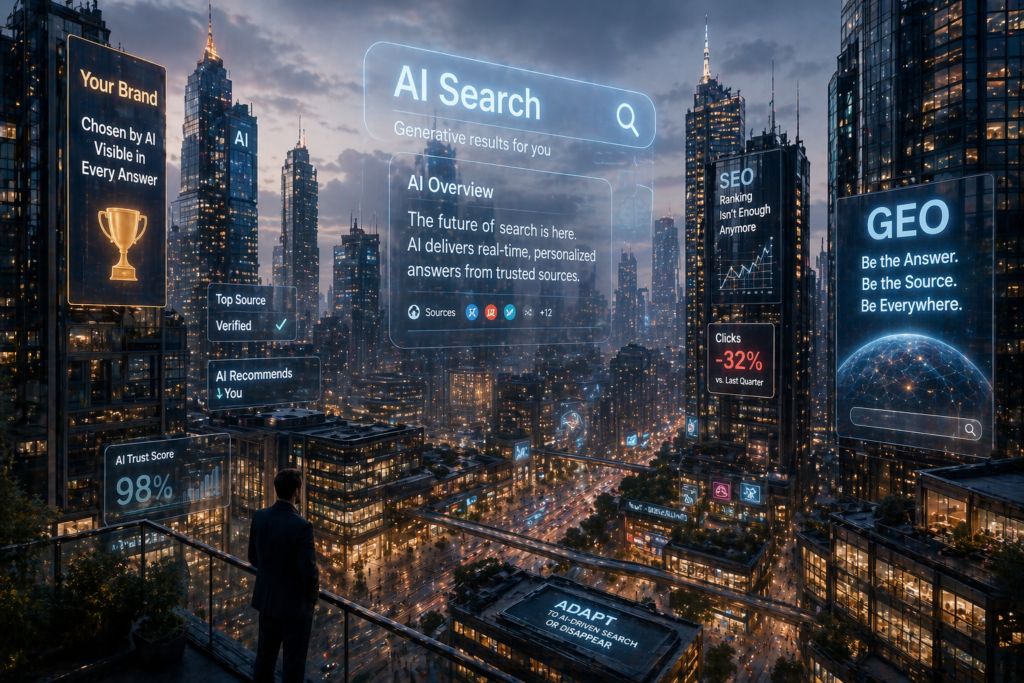
This change is not speculative—it’s already happening. Google’s AI Overviews and the zero-click search trend demonstrate the absorption of SEO into AI interfaces. Users increasingly get their answers directly from AI, bypassing the need to click through search results. This evolution is seen as a shift from featured snippets to AI-generated summaries, where content is synthesized and presented succinctly by AI.
SEO is not dead; it is evolving. It’s being redefined and absorbed into a larger ecosystem where AI plays a pivotal role. The focus is shifting from being highly ranked to becoming a part of the AI’s knowledge base, a credible source that AI trusts and uses to build its responses.
What Works in GEO (Differentiation Section)
To excel in GEO and ensure your content is chosen by AI, focus on creating citable content. This means offering direct answers without lengthy introductions, using structured clarity with headings and bullet points, and backing claims with data and reasoning. AI favors content that is easy to parse and verify.
Entity-driven content is another critical component. Mentioning tools, brands, and frameworks helps build topical authority, making your content more likely to be recognized and cited by AI systems. This approach not only enhances credibility but also strengthens the content’s relevance in AI searches.
First-principles thinking is essential. Explain the “why” and “how” behind your assertions, avoiding generic statements that add little value. Depth over volume is key—focus on creating topic clusters rather than scattering random blogs. Multi-format coverage, including blogs, FAQs, comparisons, and use cases, ensures comprehensive coverage of topics, increasing your chances of being chosen by AI.
SEO vs GEO — Decision Table
When deciding between SEO and GEO, frame it as strategic decisions rather than definitions. If your primary goal is traffic, SEO remains your tool. However, if you aim for AI visibility, GEO is where you should focus your efforts. Traditional SEO may drive clicks, but GEO positions your content for trust and citations by AI.
In practice, this means understanding where to invest your resources. If you want immediate traffic, continue with SEO strategies. However, if you aim for long-term authority and inclusion in AI-generated content, GEO should be your strategic focus.
Real Example
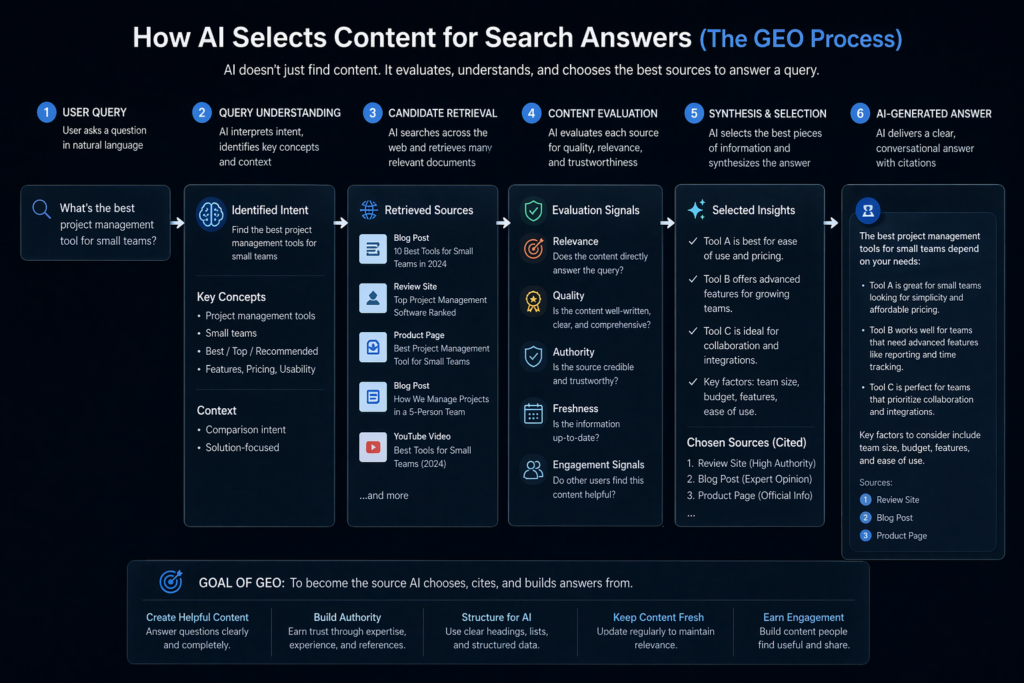
Consider the query “Best CRM for startups.” An SEO-focused article might present a keyword-heavy listicle, aiming to capture search engine rankings. However, a GEO-ready content piece would offer a structured comparison, providing clear answers and reasoning. It would delve into the strengths and weaknesses of various CRMs, backed by data and scenarios applicable to startups.
AI would prefer the latter because it provides a synthesized, authoritative answer that can be used to generate an overview. The structured approach, clarity, and depth make it a more reliable source for AI to draw from, thus ensuring it is chosen over a traditional SEO article.
Why Most Content Will Fail
Most content today will fail to be chosen by AI because it is optimized for keywords, not questions. Over-optimized introductions and weak answers mean that the content lacks depth and fails to establish topical authority. AI systems are designed to filter out generic content, favoring pieces that provide clear, concise, and valuable insights.
The failure to adapt to this new reality will result in content being ignored by AI systems. To be successful, content must evolve to meet the needs of AI, offering depth, clarity, and authority that can convince AI to use it as a reliable source.
How to Transition
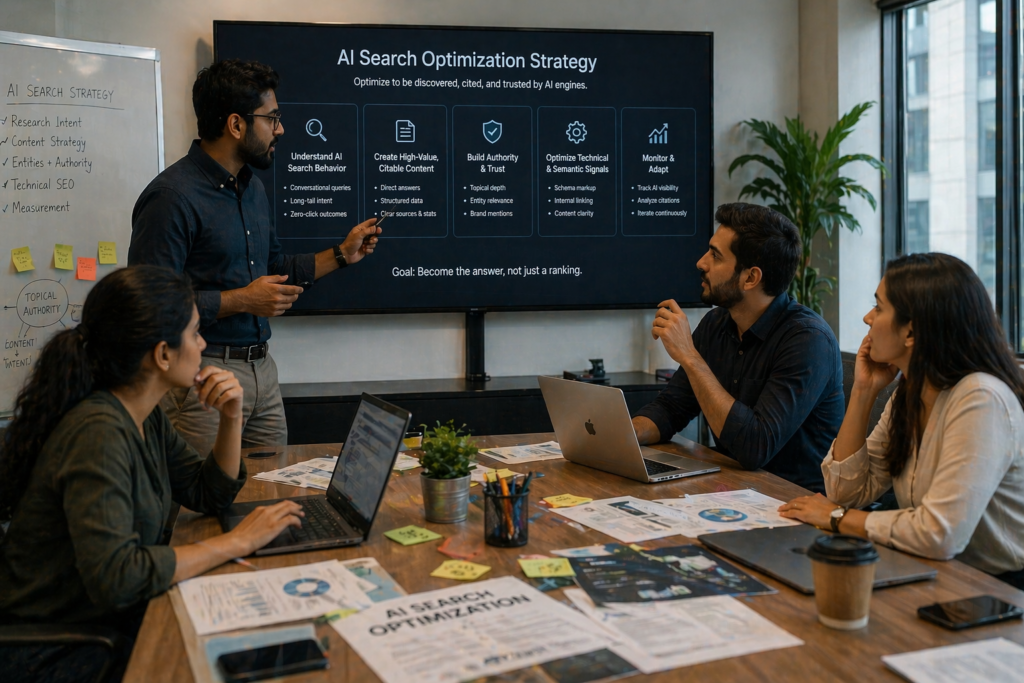
To transition from SEO to GEO, start by auditing your content to remove fluff. Focus on adding FAQs and structured answers that address specific user questions. Building topic clusters around key areas of expertise will enhance your authority and increase the likelihood of being chosen by AI.
Emphasize clarity and authority in your content creation process. Track AI visibility metrics, not just traditional rankings, to understand how often your content is cited by AI systems. This shift in focus will guide your strategy and ensure your content remains relevant in the AI era.
This is where vyndow is excelling in finding the key areas to improve for ranking on google ai overview.
Conclusion
SEO will still bring traffic. GEO will decide who gets included in the answer. The landscape of digital discovery is changing, and those who adapt to this new reality will find themselves at the forefront of being chosen by AI. By shifting your mindset from ranking on Google to being cited by AI, you position yourself for success in the evolving digital world.
Further reading:
AI Overviews by Google — Insights on Google’s AI Overviews