
Writesonic vs Vyndow: AI SEO Battle
In the competitive landscape of AI-powered content creation tools, both Writesonic and Vyndow SEO have carved out their niches. However, while both offer AI article writing capabilities, the depth of their technical SEO functionalities sets them apart significantly. For content creators, digital marketers, and SEO agencies, choosing the right tool can mean the difference between a mediocre post and a fully optimized, ready-to-publish masterpiece. This detailed comparison aims to elucidate why Vyndow SEO emerges as the superior choice for those who prioritize technical SEO execution.
The Efficiency Trap: Why a High SEO Score in Write Sonic Doesn’t Mean Your Post is “Ready to Rank”
Writesonic is well-regarded for its intuitive writing tools and the ability to generate content that scores high on SEO checkers. However, an elevated SEO score in Writesonic is not synonymous with being ready to rank. The platform provides users with an “SEO Score,” which merely serves as an advisory metric rather than a comprehensive solution. This is akin to receiving a shopping list instead of a fully cooked meal—valuable, but far from the finished product.
Vyndow SEO, on the other hand, bridges this gap by delivering not just the content but also the technical architecture needed for immediate publication. With Vyndow, the content is accompanied by auto-generated H1-H3 hierarchies, SEO titles, and meta descriptions. This results in a seamless transition from content creation to content publication, eliminating the need for additional manual adjustments that Writesonic users must typically undertake.
In practice, this means that while Writesonic users may spend extra time tweaking their posts to achieve optimal search engine visibility, Vyndow users are already ahead, having moved on to their next project. This efficiency in workflow is a crucial differentiator for high-volume publishers and SEO agencies aiming to maximize output without sacrificing quality.
Technical Deep Dive: Manual Schema Setup in Writesonic vs. Automated JSON-LD in Vyndow
Schema markup is a powerful tool for improving search visibility, enabling search engines to understand the content context better. Writesonic offers an SEO checker that advises on schema usage but stops short of actual implementation. Users often find themselves reverting to third-party plugins to manually incorporate schema, a task that can be both time-consuming and error-prone.
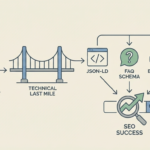
Vyndow SEO revolutionizes this process by automatically generating JSON-LD output, including FAQ and Article Schema, that is ready to be pasted directly into the content management system. This automation not only saves time but also ensures that the schema is correctly formatted and aligned with Google’s evolving standards, thus enhancing the chances of appearing in rich snippets.
For instance, a digital marketing agency managing multiple client accounts can significantly benefit from Vyndow’s automated schema capabilities. The reduction in manual intervention not only speeds up the delivery process but also minimizes the risk of human error, thereby maintaining a consistent quality standard across all published content.
The Hidden SEO Asset: Vyndow’s Automated Alt-Tags and Image Prompts
Images play a critical role in engaging readers and breaking up text-heavy content. However, the SEO potential of images is often overlooked, particularly in terms of alt-tags and image prompts. Writesonic provides image generation through Photosonic but leaves the task of crafting SEO-friendly alt-text to the user, a common oversight that can diminish a post’s overall SEO effectiveness.
Vyndow SEO addresses this “Forgotten SEO” problem by pairing each image prompt with an SEO-optimized alt-tag, ensuring that every visual element contributes to the content’s search engine ranking. This consideration extends the SEO strategy beyond text, encompassing all aspects of the content.
For content creators aiming to dominate image search results, Vyndow’s approach offers a substantial advantage. By automating the generation of descriptive, keyword-rich alt-tags, Vyndow ensures that images are not just decorative elements but integral parts of the SEO strategy.

Workflow Comparison Table: Feature-for-Feature List
Schema
Write Sonic: Requires manual intervention and third-party plugins for schema integration.
Vyndow: Provides auto-generated JSON-LD schema ready for immediate use.
Alt-Tags
Write Sonic: Leaves alt-text creation to the user, often leading to missed SEO opportunities.
Vyndow: Automatically generates SEO-optimized alt-tags for all images.
Tonality
Write Sonic: Can sound generic and template-heavy, lacking industry-specific nuances.
Vyndow: Employs a “Voice-Match” engine to ensure content aligns with industry-specific tonality.
Readiness
Write Sonic: Provides text that still requires additional SEO optimization.
Vyndow: Delivers “Ready-to-Publish” content with a complete technical SEO package.
Verdict: Who Should Choose Which Tool?
For niche bloggers and SEO agencies looking to scale content production without compromising on quality, Vyndow SEO is the clear winner. Its ability to deliver a comprehensive technical SEO package alongside high-quality content reduces the per-post labor cost significantly and speeds up the publishing process.
On the other hand, Writesonic remains a viable option for users who are primarily focused on creative copywriting and do not mind investing additional time in technical SEO adjustments. For those who prioritize content creation over technical execution, Write Sonic’s tools offer a solid foundation for crafting engaging articles.
Ultimately, the choice between Write Sonic and Vyndow depends on your specific needs and workflow preferences. For those seeking a full-stack AI publisher that minimizes manual intervention and maximizes efficiency, Vyndow SEO stands out as the superior choice.
Further reading:
technical SEO execution — Understand Vyndow’s approach to technical SEO
FAQs
Q1. How does Vyndow SEO automate technical SEO tasks?
Vyndow SEO automates technical SEO by providing auto-generated H1-H3 hierarchies, SEO titles, meta descriptions, and JSON-LD schema, eliminating the need for manual adjustments.
Q2. What are the benefits of using Vyndow for image SEO?
Vyndow enhances image SEO by pairing each image prompt with an SEO-optimized alt-tag, ensuring all visual elements contribute to search engine ranking, unlike Writesonic which requires manual alt-text creation.
Q3. Why is schema markup important for SEO?
Schema markup helps search engines understand content context, improving search visibility and increasing the chances of appearing in rich snippets. Vyndow automates this process with ready-to-paste JSON-LD schema.
Q4. Who benefits most from using Vyndow SEO?
Niche bloggers, SEO agencies, and business owners benefit from Vyndow SEO, as it reduces per-post labor costs and speeds up publishing by providing a complete technical SEO package.
What is the main difference between Writesonic and Vyndow in terms of SEO readiness?
Writesonic offers content with an SEO score that requires further optimization, while Vyndow delivers ready-to-publish content with a complete technical SEO package, saving time and effort.


4 thoughts on “Write Sonic vs. Vyndow: Which AI Blog Writer Handles Technical SEO Better?”
Comments are closed.