
The Complete Guide to Generative Engine Optimization (GEO)
Introduction: Why Search Has Fundamentally Changed
The landscape of search is undergoing a seismic shift, driven by the rise of AI-powered search engines that prioritize direct answers over traditional link-based results. Historically, SEO has been a game of optimizing web pages to rank for specific keywords, but this paradigm is changing. AI models like Google SGE, ChatGPT, and Perplexity are transforming search experiences, providing users with synthesized answers instead of a list of links. This evolution signals a fundamental change in how we interact with search engines and demands a new approach: Generative Engine Optimization (GEO).
Traditional SEO, with its emphasis on page ranking and keyword optimization, is becoming insufficient in the face of AI’s ability to understand and generate responses. The problem lies in the fact that the search behavior is shifting from seeking links to seeking answers. Users now expect immediate, concise, and relevant information, and AI is stepping up to meet these expectations. The solution is GEO, an approach that embraces the capabilities of AI to provide accurate, synthesized content that can be easily interpreted and cited by these advanced search systems.
Vyndow SEO recognizes this shift as not just an experiment but an inevitable transition that demands adaptation. Our focus is on equipping creators with a ‘Ready-to-Publish’ technical framework that aligns with this new search paradigm. As search behavior continues to evolve, embracing GEO is essential for those aiming to remain relevant and competitive.
What Is Generative Engine Optimization?
Generative Engine Optimization (GEO) is the practice of structuring content so it can be accurately understood, synthesized, and cited by AI-powered search and answer engines. It’s about moving beyond the traditional SEO methods of keyword stuffing and link building to a more nuanced understanding of content creation that aligns with AI’s capabilities.
At its core, GEO involves crafting content that AI systems can easily extract, summarize, and reference. This means focusing on clarity, context, and relevance rather than solely on rankings. For marketers, this translates to creating content that is not just about visibility but about being the source of credible, reliable information that AI can use to generate precise answers for users.
Practically speaking, GEO requires a shift in how content is developed. It involves understanding how AI interprets information, ensuring that content is not only rich in data but structured in a way that AI can easily digest. This involves using clear hierarchies, well-defined schema markup, and metadata that guide AI in understanding the content’s context and relevance, ensuring it stands out as a valuable resource.
How Generative Engines Actually Work
From Crawling Pages to Synthesizing Answers
Generative engines operate fundamentally differently from traditional search engines. Instead of crawling pages to rank them based on keywords, generative engines aim to synthesize answers. This involves understanding the user’s query in a broader context and pulling relevant information from various sources to construct a coherent response.
AI models use vast datasets to train themselves, enabling them to understand language nuances and context. They don’t just retrieve information; they synthesize it into meaningful answers, prioritizing content that provides comprehensive, clear, and contextually relevant information.
How AI Models Select Information
AI models select information based on context windows and entity relationships. A context window allows the AI to maintain the context of a conversation or a query, enabling it to provide more precise answers. Entity relationships help AI understand the connections between different pieces of information, ensuring that the synthesized answer is not only relevant but also accurate.
This selection process emphasizes the importance of structured content. AI looks for content that is not only relevant but also well-organized and easy to interpret. This is where GEO’s emphasis on structured content becomes crucial, as it aligns with AI’s need for clarity and context.
Why “Best Content” ≠ “Most Useful Answer”
In the realm of generative engines, the best content is not always the most useful answer. While traditional SEO focused on creating the best content for ranking, GEO emphasizes creating content that provides the most useful answers. This means focusing on clarity, context, and relevance rather than just quality.
AI models prioritize content that directly answers queries and provides clear, concise information. This shift requires content creators to focus on how their content can be used by AI to generate useful answers, rather than just creating high-quality content for human readers.
GEO vs SEO: What’s Actually Different?
| Dimension | SEO | GEO |
| Primary Goal | Page Ranking | Answer Synthesis |
| Ranking Unit | Web Pages | Information Snippets |
| Content Structure | Keyword Focused | Contextually Rich |
| Success Metrics | Traffic and Visibility | Answer Accuracy and Relevance |
| Output Format | Link Lists | Synthesized Responses |
The shift from SEO to GEO marks a significant change in strategies, content structure, and outcomes. While SEO focuses on optimizing web pages to rank higher in search results, GEO emphasizes creating content that AI can easily synthesize into direct answers.
The primary goal of GEO is not just visibility but being the source of reliable answers. This means structuring content in a way that AI can easily interpret and use, focusing on context and clarity rather than just keywords. Success in GEO is measured by the accuracy and relevance of the answers generated by AI, not just by traffic and visibility.
In practice, this means content creators must prioritize creating information snippets that are contextually rich and easy for AI to use. This involves using clear hierarchies, schema markup, and metadata to guide AI in understanding the content’s context and relevance.
GEO vs AEO vs AI Search Optimization
What is AEO?
Answer Engine Optimization (AEO) focuses on optimizing content to be featured in direct answers or featured snippets. It emphasizes creating content that directly answers user queries, prioritizing brevity and relevance. AEO is closely related to GEO, as both aim to provide direct answers to user queries.
However, AEO is more about optimizing for specific features in search engines, while GEO is about structuring content for AI synthesis. AEO focuses on being featured in snippets, whereas GEO focuses on being the source of reliable information for AI-generated answers.
Where AI Search Optimization Fits
AI Search Optimization involves optimizing content for AI-driven search engines, focusing on how AI interprets and uses information. It encompasses both AEO and GEO, as it involves optimizing content for both direct answers and AI synthesis.
AI Search Optimization requires understanding how AI models work, focusing on clarity, context, and relevance. It involves creating content that is easy for AI to interpret and use, ensuring that it stands out as a valuable resource.
Why GEO is the Umbrella Concept
GEO represents the most comprehensive approach to optimizing content for AI-driven search engines. It encompasses both AEO and AI Search Optimization, focusing on structuring content for AI synthesis and ensuring that it provides accurate, relevant answers.
GEO is about more than just being featured in snippets or optimizing for AI. It’s about creating content that aligns with AI’s capabilities, focusing on clarity, context, and relevance. This makes GEO the umbrella concept for optimizing content in the age of AI-powered search engines.
How AI Engines Evaluate and Use Content
Entity Clarity

Entity clarity is a fundamental aspect that AI systems use to evaluate content. Unlike traditional keyword-centric approaches, AI engines prioritize understanding the entities within the content. Entities are essentially the nouns that AI recognizes and associates with specific concepts, people, places, or things. For example, when discussing “solar panels,” the AI engine identifies it as an entity connected to renewable energy. Clarity in these entities ensures that AI can accurately interpret and categorize the content.
To achieve entity clarity, content creators should focus on precise language and avoid ambiguous terms that could confuse AI systems. For instance, using “electric vehicles” rather than “cars” when discussing green technology provides clearer context. This specificity helps AI engines to establish a direct link between the content and the relevant topics, improving the chances of the content being selected for answers.
Incorporating structured data can also enhance entity clarity. By using schema markup, content creators can explicitly define the entities in their content, making it easier for AI systems to parse and understand. This structured approach aligns with how AI systems process information, thus increasing the content’s likelihood of being used in AI-generated answers.
Structural Readiness
Structural readiness refers to the way content is organized to facilitate AI comprehension. AI engines favor content with a clear hierarchy and logical flow, enabling them to extract information efficiently. This means that headings, subheadings, and bullet points are not just for human readers; they are critical for AI systems as well.
For example, a well-structured article on climate change might begin with an overview, followed by sections on causes, effects, and solutions. Each section should have clear headings and subheadings, allowing AI to navigate and summarize the content effectively. This structural readiness is key to ensuring that content is not only discovered but also selected by AI systems for dissemination.
Moreover, content creators should consider using lists and bullet points for key information. AI engines can easily extract these concise points and use them in summary or answer formats. This approach enhances the content’s utility for AI-driven platforms, increasing its chances of being featured prominently.
Context Completeness
Context completeness is another critical factor that AI systems evaluate. It involves providing comprehensive information on a topic, ensuring that all relevant aspects are covered. AI engines are designed to offer users complete answers, and incomplete content is less likely to be favored.
For instance, an article on artificial intelligence should not only discuss its benefits but also address potential challenges and ethical considerations. By presenting a well-rounded view, content creators can ensure that their material aligns with the AI’s goal of delivering thorough and balanced information.
To achieve context completeness, content creators should conduct thorough research and include diverse perspectives. This approach not only satisfies AI systems but also offers value to human readers, who seek comprehensive insights. By focusing on depth and breadth, content can meet the expectations of both audiences.
Source Trust and Citability
AI engines are increasingly discerning in their evaluation of source trust and citability. Content that draws from credible and authoritative sources is more likely to be favored by AI systems. This trustworthiness is essential for ensuring that content is selected for AI-generated answers.
Content creators should prioritize sourcing information from reputable publications, academic journals, and recognized experts in the field. Citing these sources clearly within the content helps to establish its credibility and increases its appeal to AI systems.
Additionally, ensuring that the content is easily citable—by using clear attributions and references—enhances its utility for AI engines. Content that is perceived as reliable and authoritative is more likely to be integrated into AI-generated responses, thereby extending its reach and impact.
Content Architecture for Generative Engine Optimization
Writing for Extraction, Not Ranking
In a GEO context, writing for extraction rather than ranking is paramount. While traditional SEO focuses on keyword optimization to improve search engine rankings, GEO emphasizes creating content that AI systems can easily extract and use in their outputs.
To achieve this, content should be concise and to the point, with clear definitions and explanations. For example, when writing about quantum computing, providing a succinct definition followed by key principles allows AI to extract relevant portions for user queries.
This shift from ranking to extraction requires a mindset change for content creators. Instead of focusing solely on keywords, they should prioritize clarity and precision, ensuring that each piece of information is readily accessible to AI systems.
Structuring Content for AI Summarization
Structuring content for AI summarization involves organizing information in a way that facilitates quick understanding and extraction by AI engines. This means using headings, subheadings, and summaries to break down complex information into digestible parts.
For instance, an article on digital marketing trends could start with an executive summary, followed by sections on individual trends such as influencer marketing, data analytics, and AI integration. Each section should be clearly delineated, allowing AI to summarize and extract information efficiently.
By adopting this structured approach, content creators can enhance the AI-readiness of their material, increasing its chances of being featured in AI-generated summaries and responses.
Why Long Content Alone Doesn’t Work
While long-form content has traditionally been valued for SEO purposes, in the context of GEO, length alone is insufficient. AI systems prioritize content that is not only comprehensive but also well-organized and easily extractable.
Long content that lacks clear structure or focus can be detrimental, as AI systems may struggle to identify and extract relevant information. Instead, content should be as long as necessary to cover the topic thoroughly, but with a clear and logical flow.
For example, a detailed guide on sustainable agriculture should be broken down into sections, each addressing a specific aspect such as soil management, crop rotation, and water conservation. This approach ensures that the content is both informative and accessible to AI systems.
Measuring GEO Success (And Why Traffic Isn’t Enough)
In the realm of GEO, traditional metrics like website traffic are no longer sufficient indicators of success. Instead, visibility within AI-generated answers is becoming a more relevant measure of content effectiveness.
Key metrics for GEO success include AI mentions, brand inclusion in AI-generated answers, and citation frequency. These metrics reflect how often content is being utilized by AI systems, providing a more accurate gauge of its impact and reach.
Additionally, topic association is another important metric. It measures how closely a brand or content is associated with key topics within AI-generated outputs. This association indicates the content’s relevance and authority in the eyes of AI systems.
By focusing on these advanced metrics, content creators can gain a deeper understanding of their GEO performance, allowing them to refine their strategies and enhance their visibility in the AI-driven digital landscape.
Common GEO Mistakes Teams Are Making Today
As teams seek to optimize for AI search and generative engines, several common mistakes can hinder their efforts. Recognizing and addressing these pitfalls is essential for achieving GEO success.
One prevalent mistake is treating GEO as merely “SEO + AI.” This approach overlooks the unique requirements and dynamics of GEO, such as the need for entity clarity and structural readiness. Instead, GEO should be viewed as a distinct discipline with its own set of principles and strategies.
Another common error is overusing generic AI content. While AI-generated content can be efficient, it often lacks the depth and specificity needed for GEO. Content creators should strive to produce original and insightful material that aligns with AI systems’ expectations for clarity and context.
Ignoring entity structure is another critical mistake. Without clear entities, AI systems may struggle to interpret and categorize the content, reducing its chances of being selected for answers. Content creators should prioritize defining entities and using structured data to enhance clarity and understanding.
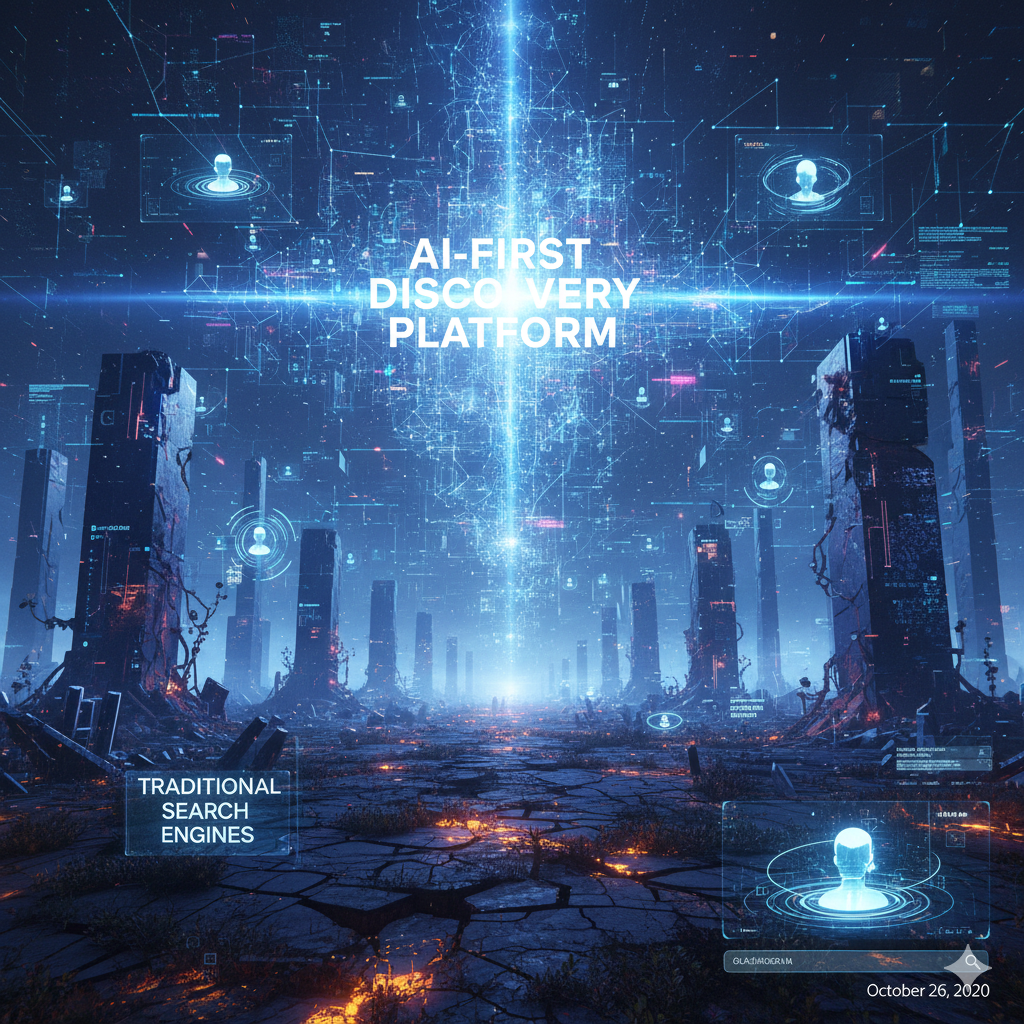
The Future of Search: Where GEO Is Headed
The future of search is poised for significant transformation, with GEO playing a central role. As AI-first discovery becomes the norm, traditional search engines will give way to more sophisticated AI-driven platforms.
This shift will result in fewer clicks but higher influence, as AI systems deliver direct answers and insights rather than directing users to external websites. Brands will need to focus on becoming the answer rather than merely providing a link, emphasizing the importance of entity clarity and content architecture.
In this evolving landscape, GEO will become a core marketing discipline, with content creators and marketers adapting to the nuances of AI-driven search. By staying ahead of these trends, organizations can position themselves for success in the AI-dominated future.
Where Vyndow GEO Fits
Vyndow GEO helps teams operationalize Generative Engine Optimization by embedding senior-level structure into execution. By providing a complete technical package, Vyndow GEO eliminates the friction between content creation and ranking, ensuring that content is ready to publish with human-grade brand voice and machine-perfect technical SEO. This capability leads to enhanced visibility and influence in the AI-driven digital landscape, allowing organizations to achieve their GEO goals with efficiency and precision.
Conclusion
The shift to AI-powered search engines demands a new approach to content creation. Generative Engine Optimization (GEO) represents a fundamental change in how we structure content, focusing on enabling AI systems to extract, summarize, and reference information effectively. As search behavior continues to evolve, embracing GEO is essential for those aiming to remain relevant and competitive in this new search paradigm.
For marketers, this means focusing on clarity, context, and relevance rather than just rankings. It requires a shift in how content is developed, ensuring that it aligns with AI’s capabilities and provides accurate, reliable answers. By embracing GEO, content creators can ensure that their content stands out as a valuable resource in the age of AI-powered search engines.
Vyndow SEO is at the forefront of this shift, providing a comprehensive technical framework that aligns with the demands of AI-driven publishing. Our focus on providing ‘Ready-to-Publish’ content ensures that creators can efficiently produce content that meets the needs of modern search engines, positioning them for success in this new era of search.
“`
Further reading:
effective content synthesis — Highlight the importance of content synthesis
comprehensive technical framework — Describe Vyndow SEO’s offerings
FAQ’s
Q. How does GEO differ from traditional SEO?
A. GEO focuses on enabling AI to extract, summarize, and reference content, whereas traditional SEO is about optimizing web pages for keyword ranking. GEO emphasizes clarity, context, and relevance, making content more usable for AI-driven search engines.
Q. What is the primary goal of Generative Engine Optimization?
A. The primary goal of GEO is to provide AI systems with content that can be easily synthesized into accurate and relevant answers. It shifts the focus from page ranking to answer synthesis, ensuring content is useful for AI-generated responses.
Q. How do AI models select information for search results?
A. AI models use context windows and entity relationships to select information. They synthesize data from various sources, focusing on providing comprehensive and contextually relevant answers rather than just retrieving information based on keywords.
Q. Why is GEO considered the umbrella concept in AI search optimization?
A. GEO encompasses both Answer Engine Optimization and AI Search Optimization, focusing on structuring content for AI synthesis. It aims to provide accurate, relevant answers, aligning with AI’s capabilities and making it the most comprehensive approach to AI-driven search.
Q. What role does Vyndow SEO play in the shift to GEO?
A. Vyndow SEO provides a ‘Ready-to-Publish’ technical framework that aligns with the demands of AI-driven publishing. It helps content creators efficiently produce content that meets modern search engine needs, ensuring they remain competitive in the evolving search landscape.
Q. What is Generative Engine Optimization (GEO)?
A. Generative Engine Optimization (GEO) is a digital marketing discipline focused on optimizing content for AI systems to enhance visibility and influence. Unlike traditional SEO, GEO emphasizes entity clarity, structural readiness, and context completeness to ensure content is selected by AI engines.
Q. How does entity clarity affect AI content evaluation?
A. Entity clarity is crucial for AI systems as it helps them understand and categorize content effectively. By using precise language and structured data, content creators can improve entity clarity, making it easier for AI engines to interpret and use the content in AI-generated answers.
Q. Why is structural readiness important in GEO?
A. Structural readiness involves organizing content with clear hierarchies and logical flow. This makes it easier for AI engines to extract and summarize information, increasing the chances of content being featured in AI-driven platforms. Using headings, subheadings, and bullet points enhances structural readiness.
Q. What metrics should be used to measure GEO success?
A. Success in GEO is measured by visibility within AI-generated answers rather than traditional metrics like website traffic. Key metrics include AI mentions, brand inclusion in AI answers, citation frequency, and topic association. These metrics reflect the content’s relevance and impact in the AI-driven landscape.
Q. What common mistakes should be avoided in GEO?
A. Common mistakes in GEO include treating it as “SEO + AI,” overusing generic AI content, and ignoring entity structure. These errors can hinder content effectiveness in AI systems. Content creators should focus on clarity, originality, and structured data to optimize for GEO.



2 thoughts on “The Future of Generative Engine Optimization: A 2026 Guide”
Comments are closed.