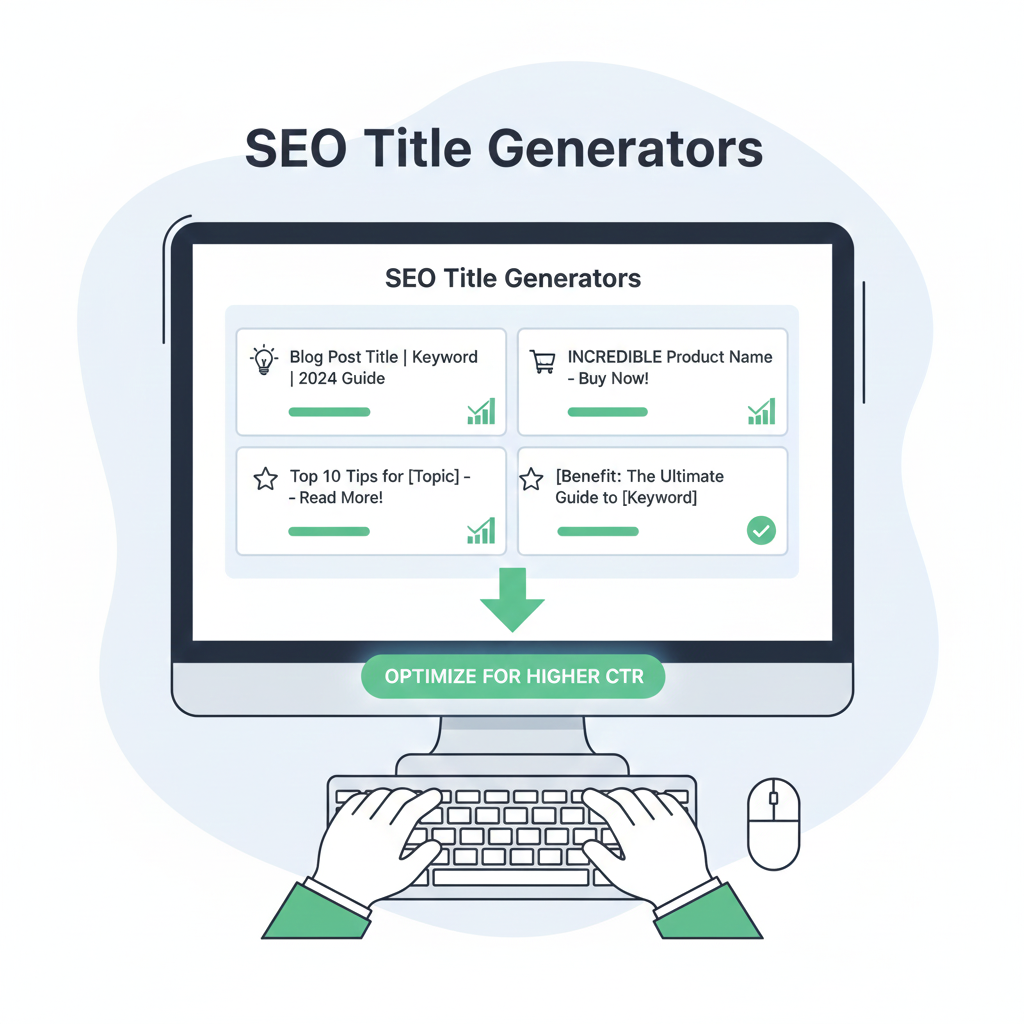
How to Use an SEO Title Generator for Higher CTR
In the digital landscape of 2026, creating captivating and effective titles is more crucial than ever. The competition for clicks is fierce, and the old tricks of the trade are no longer sufficient. Titles are not just a gateway to your content; they are the first impression your potential reader encounters. With the rise of AI-generated content, the uniqueness and precision of your title can mean the difference between a click and a scroll. This article explores the psychology behind crafting compelling titles, leveraging SEO title generators, and optimizing for both search engines and human readers to boost your click-through rate (CTR).
Understanding the nuances of title creation is essential in an era where Google frequently rewrites titles in search results. To combat this, content creators must employ strategies that balance SEO best practices with engaging, human-readable titles. This guide will delve into the art and science of title creation, focusing on the synergy between curiosity-driven and direct-answer approaches, and how AI tools like Vyndow can streamline the process.
The 2026 Title Landscape: Navigating Google’s Rewrites
Google’s tendency to rewrite titles in search results is a challenge that content creators must address. As the algorithm becomes more sophisticated, it aims to deliver the most relevant and informative titles to searchers, sometimes altering the ones provided by the website. This can significantly impact your CTR if not handled correctly. Understanding the factors that lead to title rewrites and how to prevent them is crucial for maintaining the integrity of your content.
To mitigate the risk of Google altering your titles, ensure that your titles are not only optimized for SEO but also align with the search intent. This involves conducting thorough keyword research and understanding what your audience is truly searching for. Titles should be concise, relevant, and contain primary keywords that resonate with your audience’s queries.
Moreover, using tools like Vyndow SEO can help automate the process of crafting titles that are both SEO-friendly and appealing to readers. By leveraging AI-driven insights, you can generate titles that are less likely to be rewritten by Google, thereby preserving the intended message and maximizing your content’s reach.
Psychology of Headings: Curiosity Gap vs. Direct Answer
The psychology behind headings is a fascinating interplay between creating intrigue and providing clarity. The “Curiosity Gap” approach involves crafting titles that pique the reader’s interest without giving away too much information. This method encourages clicks by leaving the audience wanting to know more. For instance, a title like “The Secret to Doubling Your Traffic” invites readers to discover the hidden strategy within the content.
In contrast, the “Direct Answer” approach provides immediate clarity, offering a straightforward answer to a specific question. Titles such as “How to Double Your Traffic in 30 Days” cater to readers who seek quick solutions and actionable advice. This method is effective when the audience is looking for specific information and wants to know upfront what they can expect from the content.
Choosing between these two approaches depends on your target audience and the type of content you are offering. By understanding your audience’s preferences and the context of your content, you can decide whether to employ a curiosity-driven title or a direct answer. Both methods can be powerful tools in boosting CTR when used appropriately.
A/B Testing with AI: Optimizing Title Variations
A/B testing is a crucial step in optimizing your titles for maximum impact. With AI-powered tools like Vyndow, you can generate multiple title variations and test them to determine which one performs best. This process involves creating 5 or more title variations that balance keyword optimization and clickability.
For example, you might generate titles such as “Boost Your CTR with These Proven Strategies” or “Discover the Best SEO Title Generator for Your Blog.” By analyzing the performance of each title in terms of clicks and engagement, you can identify which resonates most with your audience and aligns with your SEO goals.
The insights gained from A/B testing can inform future title creation, helping you refine your strategy and produce titles that consistently drive traffic. By leveraging AI to streamline this process, you can focus on crafting high-quality content while ensuring your titles are optimized for both search engines and humans.
Formatting for Devices: Mobile and AI-chat Optimization
In today’s multi-device world, optimizing titles for different platforms is essential. Mobile and AI-chat interfaces often have shorter character limits, necessitating concise and impactful titles. Ensuring your titles are easily readable and engaging across various devices can significantly enhance user experience and improve CTR.
When crafting titles, consider the character limitations of mobile search results, typically around 50-60 characters. This requires distilling your message into a compact form without losing its essence. Additionally, optimizing for AI-chat interfaces involves creating titles that are conversational and relevant to voice search queries.
By focusing on concise, platform-specific title optimization, you can ensure your content is accessible and attractive to users, no matter how they find it. This approach not only improves CTR but also enhances overall user satisfaction and engagement with your content.
The Role of SEO Title Generators in Meta Title Optimization
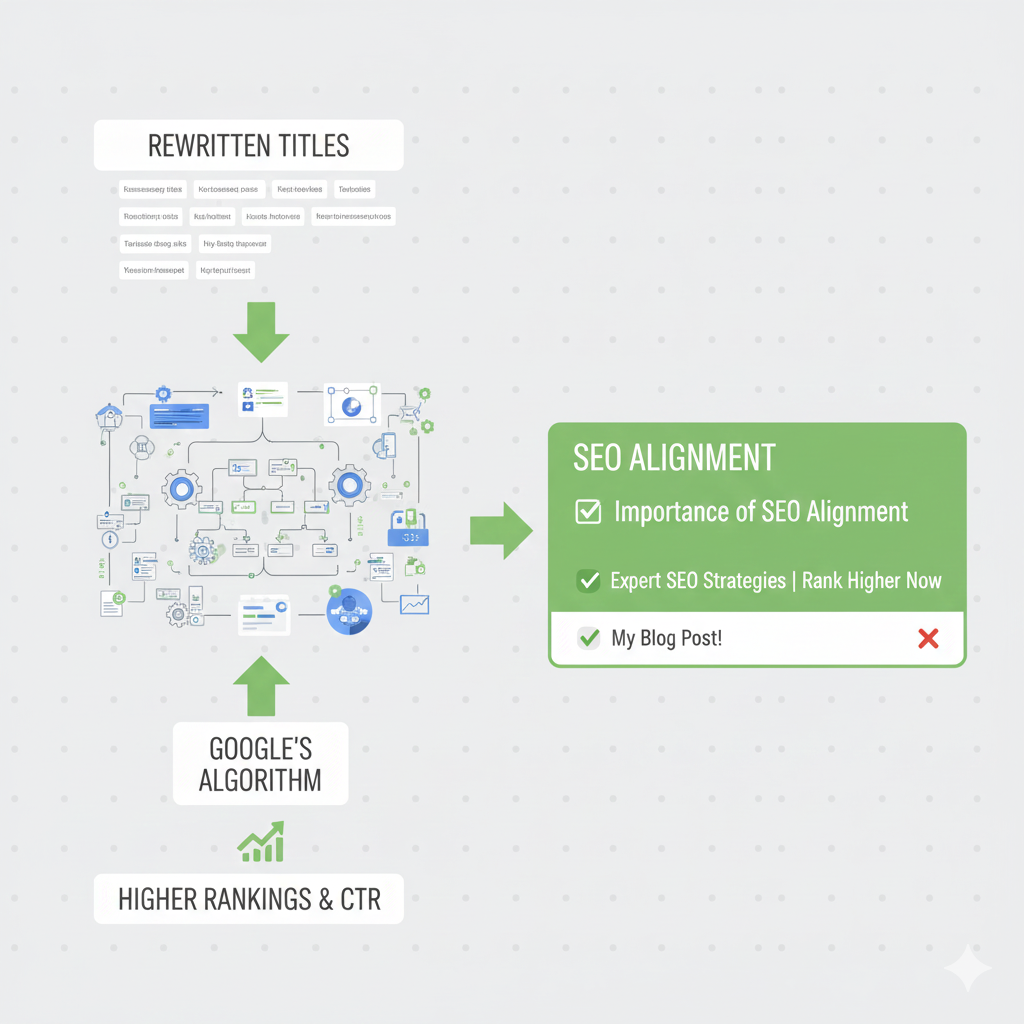
SEO title generators are invaluable tools for automating the process of meta title creation. These tools analyze key factors such as keyword density, readability, and character count to produce optimized titles that improve search engine rankings and CTR. By leveraging an SEO title generator, you can streamline the title creation process and ensure consistency across your content.
Meta title optimization is not just about inserting keywords; it involves crafting titles that accurately reflect the content and appeal to your target audience. A well-optimized meta title can significantly enhance your content’s visibility and attract more clicks from search results.
Using an SEO title generator like Vyndow ensures that your titles are not only technically sound but also engaging and relevant. This holistic approach to title optimization helps maintain a balance between SEO requirements and user appeal, ultimately driving more traffic to your site.
Branding and Voice Consistency in Title Creation
Maintaining brand consistency in your titles is essential for establishing a strong brand identity and building trust with your audience. Titles should reflect your brand’s voice and values, creating a cohesive experience for readers across all content. This consistency not only reinforces your brand’s message but also enhances user recognition and loyalty.
Tools like Vyndow SEO can assist in maintaining voice consistency by incorporating a “Voice-Match” engine that aligns titles with your brand’s tone and style. This ensures that your titles resonate with your audience and adhere to your brand’s unique characteristics.
By prioritizing branding and voice consistency in title creation, you can create a unified and recognizable presence that distinguishes your content from the competition. This approach not only enhances brand credibility but also fosters a deeper connection with your audience.
Conclusion: Embracing the Future of Title Optimization
The landscape of title creation is continually evolving, driven by advances in AI technology and changing consumer behaviors. By understanding the intricacies of title optimization and leveraging tools like Vyndow SEO, you can create titles that not only capture attention but also drive meaningful engagement.
Embracing the synergy between human creativity and AI efficiency, you can streamline the title creation process and enhance your content’s visibility and impact. Whether you’re targeting curiosity-driven readers or those seeking direct answers, the key is to craft titles that resonate with your audience and align with your SEO objectives.
As the digital landscape continues to evolve, staying ahead of the curve in title optimization will be crucial for maintaining a competitive edge. By adopting these strategies and tools, you can ensure your content stands out in a crowded digital space, driving more traffic and achieving higher CTR.
“`
Further reading:
schema code — Understand schema code for SEO
Vyndow SEO vs. Jasper vs. Write Sonic — Compare AI writing tools
technical SEO — Explore technical SEO capabilities
FAQ Draft :
Q1. Why does Google rewrite titles?
Google rewrites titles to improve relevance and user experience. The algorithm aims to provide the most informative and relevant title based on the search query. To minimize rewrites, ensure your titles align with search intent and are SEO-optimized.
Q2. What is the ‘Curiosity Gap’ in title creation?
The ‘Curiosity Gap’ is a technique where titles are crafted to pique interest without revealing too much information. This encourages clicks by making readers curious about the content. It’s effective for driving engagement but must be used judiciously based on audience preferences.
Q3. How can A/B testing improve title performance?
A/B testing allows you to compare multiple title variations to determine which one performs best in terms of clicks and engagement. By analyzing the results, you can refine your title strategy to consistently drive higher traffic and engagement.
Q4. Why is device-specific title optimization important?
Device-specific optimization ensures titles are effective across platforms, especially with character limits on mobile and AI-chat interfaces. Concise, impactful titles improve user experience and CTR by being easily readable and relevant to the user’s search context.
Q5. How do SEO title generators aid in meta title optimization?
SEO title generators automate the creation of meta titles by analyzing factors like keyword density and readability. They help produce optimized titles that enhance search engine rankings and CTR, ensuring consistency and appeal across your content.


3 thoughts on “Mastering SEO Titles: Boost Your CTR with AI”
Comments are closed.